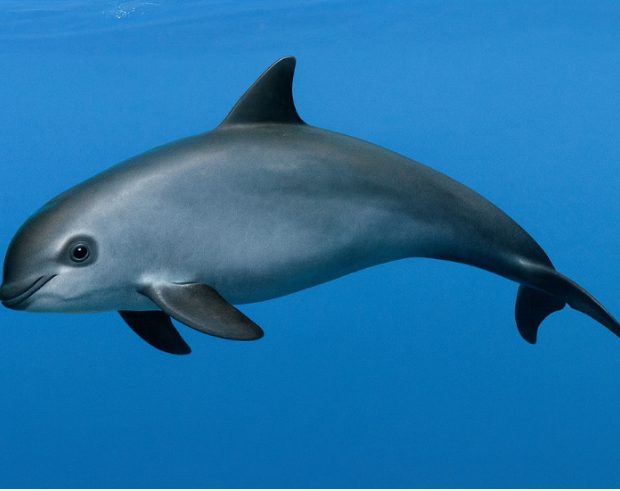
The Vaquita is an endangered marine mammal. Its scientific name is Phocoena sinus. As of early 2026, the number of vaquitas is critically low, with estimates suggesting fewer than 10 remain, making them the world’s most endangered marine mammal, still threatened by illegal gillnet fishing in Mexico’s Gulf of California.
Vaquitas are carnivores that primarily eat various small fish, squid, and crustaceans like shrimp, consuming species found near the ocean floor or in the water column in their native Gulf of California habitat, including croakers, grunts, and anchovies, swallowing their food whole. They are not picky eaters, and their diet reflects the abundant small marine life in their shallow-water environment, which they hunt using echolocation.
Dietary Breakdown:
- Fish: A wide variety, such as Gulf croakers, bairdiella croakers, grunts, herrings, and sharpnose anchovies.
- Squid: Various species are a significant part of their diet.
- Crustaceans: Shrimp and other small crustaceans are also consumed.
Hunting & Feeding:
- Vaquitas are piscivores (fish-eaters) that feed at the water’s surface or near the bottom.
- They use echolocation, a series of clicking sounds that bounce off objects to them to distinguish things that they can’t see to find prey, detecting objects through high-pitched clicks.
- Like other porpoises, they swallow their food whole, without chewing.
Their life span is 20-21 years.
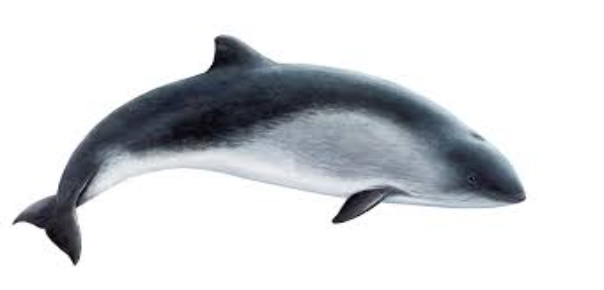
Porpoises are small toothed whales belonging to the family Phocoenidae. Though often confused with dolphins, they are a distinct group of seven species. Porpoises are small, shy marine mammals related to dolphins but distinguished by their spade-shaped teeth, rounded faces, and triangular dorsal fins, using echolocation to hunt fish like herring and cod in coastal waters, often traveling in small groups and facing threats from fishing gear and pollution. They sleep with half their brain at a time (unihemispherical sleep) to keep breathing.
- Appearance: Small, stocky bodies, short snouts, spade-shaped teeth, and triangular dorsal fins (except for finless porpoises).
- Size: Generally 5 to 7 feet long, weighing 110-265 lbs, smaller than most dolphins.
- Diet: Small schooling fish (herring, mackerel, cod), squid, and octopus, eating about 10% of their body weight daily.
- Habitat: Prefer cooler, coastal waters, bays, and estuaries, and fjords.
- Social Life: Usually in small groups (2-10), but can form larger pods.
- Threats:Commercial fishing gear (nets), habitat pollution, and prey overfishing pose risks.
- Name origin: “Porpoise” comes from “porcus” (pig) due to puffing sounds.
- Habitat: Found in northern temperate and subarctic coastal waters, including bays, estuaries, and fjords.
- Porpoise predators: Large sharks (like Great Whites), killer whales (orcas), and sometimes other dolphins.
Your donation will support the student journalists of PS IS 218 The Rafael Hernandez Dual Language Magnet School. Your contribution will allow us to purchase equipment and cover our annual website hosting costs.