









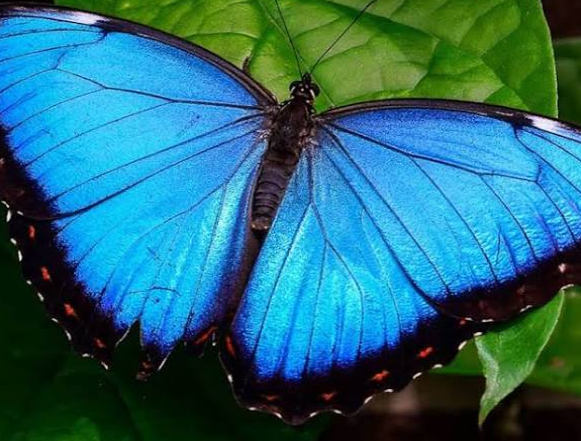


















The blue morpho (Morpho helenor Peleides) is a large, vibrant butterfly in Central/South American rainforests known for its iridescent blue wings, created by light reflecting off microscopic scales rather than pigment. Adults live only 2–3 weeks, feeding on rotting fruit and using their 5–8 inch wingspan to flash brilliant colors, which scare predators and, surprisingly, can be spotted by airplane pilots.
Key Blue Morpho Butterfly Facts
- Wings & Coloration: The top side is brilliant, iridescent blue, while the underside is brown with eyespots for camouflage against predators. Female morphos are often more brownish or yellow to blend in, while males are bright blue.
- Life Span & Cycle: Adult butterflies live for a very short time, about 2 to 3 weeks. The entire life cycle, from egg to death, takes about 115 days, with the egg stage lasting about 12–16 days.
- Diet: As caterpillars, they eat leaves from various plants, particularly in the pea family. As adults, they cannot chew and use a straw-like proboscis to drink juices from rotting fruit, decomposing animals, tree sap, and fungi.
- Habitat: They inhabit the tropical rainforests of Mexico, Central America, and South America.
- Flight & Behavior: They have a slow, wobbling flight. They are diurnal (active during the day) and are often seen in sunny clearings.
- Defense Mechanism: When threatened, the caterpillars can secrete a fluid that smells like rancid butter, and their hairs can be irritating to human skin.
- Sensory Perception: They have taste sensors on their feet to find food.
- Size: They are among the largest butterflies, with a wingspan ranging from 3.0 to 7.9 inches.
- Speed: They fly at speeds of approximately 5 to 12 miles per hour.
Fun Facts
- “Blinking” Effect: As they fly, their wings alternate between brilliant blue and dull brown, making them appear to blink in and out of sight.
- Egg Camouflage: The eggs can change color to match the leaves they are laid on.
- Unique Sound: The chrysalis of a blue morpho can emit an ultrasonic, repulsive sound if touched.
- Not Truly Blue: The mesmerizing color is not caused by pigment but by microscopic, overlapping scales that reflect light, a phenomenon called structural color.