



























Every 24th and 25th of December, we celebrate Christmas, a holiday dedicated to gift-giving and reunion. But it wasn’t always like that, nor is it like that nowadays. Many cultures have many different traditions and protagonists, some cultures even have antagonists.
Christian origin of Christmas – Nativity
In the bible, Christmas is described as the day that Jesus was born, with his mother being the Virgin Mary, who conceived Jesus by the means of the Holy Spirit. Four weeks before Christmas, the advent season starts, this period of 24-28 days signifies waiting and preparing for Jesus to be born. It marks the beginning of the loop that are the six seasons of the liturgical year. In those four weeks, the pregnant Virgin Mary and her husband Joseph look for places to stay while on their journey from Nazareth to Bethlehem.
Three Kings Day
Three Kings Day, or The Epiphany is a celebration on January 6th. It marks the arrival of Melchor, Gaspar and Balthazar, the three kings to the stable Jesus was born in, which is in Bethlehem. They were guided by the North Star from their homelands of Persia, India and Abyssinia. (Persia is now Iran and Abyssinia is now Ethiopia) The three kings each bought one present for the baby Jesus. Melchor brought gold, Gaspar brought incense, and Balthazar brought myrrh.
Germanic origin of Christmas – Yuletide
Yule or ġēola (Old English), is a pagan holiday celebrated throughout the week that the winter solstice happens, which is usually the last week of December or the week before. This holiday was celebrated by Goths, Vikings, Germans, Anglo-Saxons aka the Early English people. These Germanic peoples made their Yule decorations with many natural resources, such as leaves, logs, and even trees! Which is why we put up Christmas trees.
Yuletide + Nativity = Christmas
Yule, or ġēola in Old English, was a pagan holiday celebrated during the week of the winter solstice, usually in the last week of December or the week before. This festival was observed by the Goths, Vikings, Germans, and Anglo-Saxons, the early English peoples. They decorated their homes using natural materials like leaves, logs, and even entire trees, which is why the tradition of putting up Christmas trees continues today.
A Very Carlitos Christmas
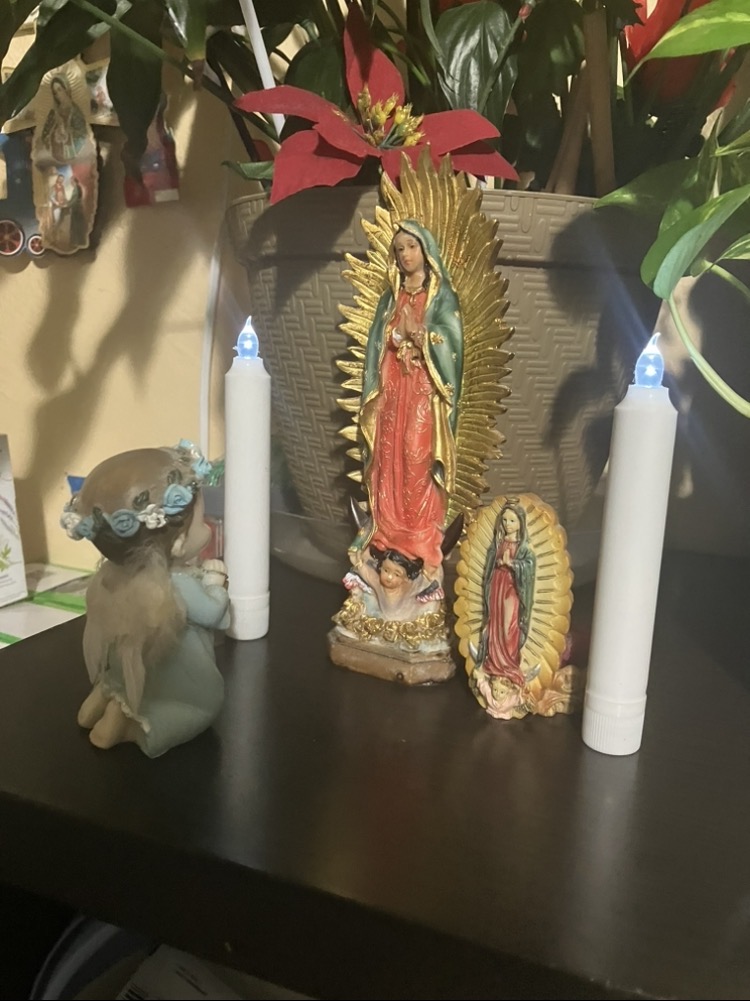
The Mexican population, which includes me, has different ways of celebrating Christmas than many Americans do, one of these includes the fact that we don’t believe in Santa. In a Mexican family, Christmas is full of games, tradition, and togetherness. We start by playing games like Lotería and Serpientes y Escaleras, then attend an evening mass to celebrate the coming of Jesus. After mass, everyone gathers at the family house for dinner. Later, around 11:00, we exchange gifts near the tree, and at midnight, we lull or sing to a small statue of the baby Jesus to help him sleep. On the evening of the 25th, the family comes together again to enjoy leftovers from the previous night.