
































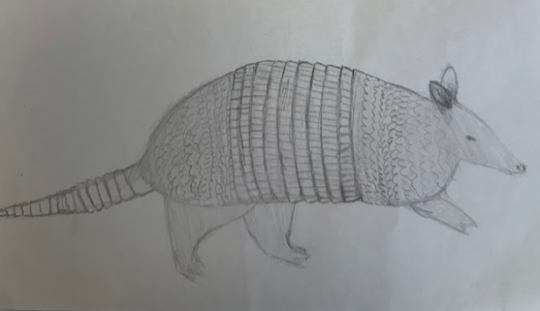
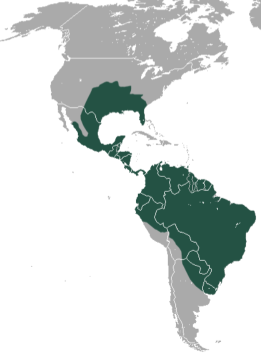
Armadillos live on land but can hold their breath for six minutes to go under water. They live on land and make burrows to live in and to escape from predators like bobcats, coyotes, foxes, bears, cougars, jaguars, birds of prey, alligators and panthers. Us humans are harmful to armadillos because we run them over and hunt them. The only species of armadillo that can completely roll into a ball for protection are three banded armadillos. Armadillos aren’t at the bottom of their food chain though, They eat turtle eggs, ground nesting bird eggs, fruits, seeds, beetles, ants, grasshoppers, cockroaches, moth larvae, worms, grubs, spiders, crustaceans, snails, leeches, millipedes, centipedes, small snakes frogs, lizards and sometimes even small mammals and small birds. Armadillos live in warm, mild habitats in Central and South America, as well as in North America. They are also nocturnal animals, which means they come out at night. Some species of armadillos like Andean Hairy Armadillos, Giant Armadillos, Brazilian Three-Banded Armadillos, Northern and Southern long Nosed Armadillos and Pichis Armadillos are endangered. Some ways we can protect endangered armadillo species by reducing hunting, protecting their natural habitats and improving road safety.

What to do if you come across an armadillo.
If you come across an armadillo don’t approach it. Even though they are not generally dangerous they can carry diseases like leprosy and sometimes rabies. If the armadillo is injured, acts aggressively or strangely, contact an expert. Armadillos can bite and scratch to defend themselves from humans and other predators.
Armadillo facts
- Armadillos have very poor eyesight and hearing.
- Armadillos can jump 3 to 4 feet in the air when startled.
- Armadillos can run 30 mph.
- Armadillos can give birth to 4 identical twins from a single egg.
- Armadillos shells are made out of hardened skin, not scales like reptiles.